
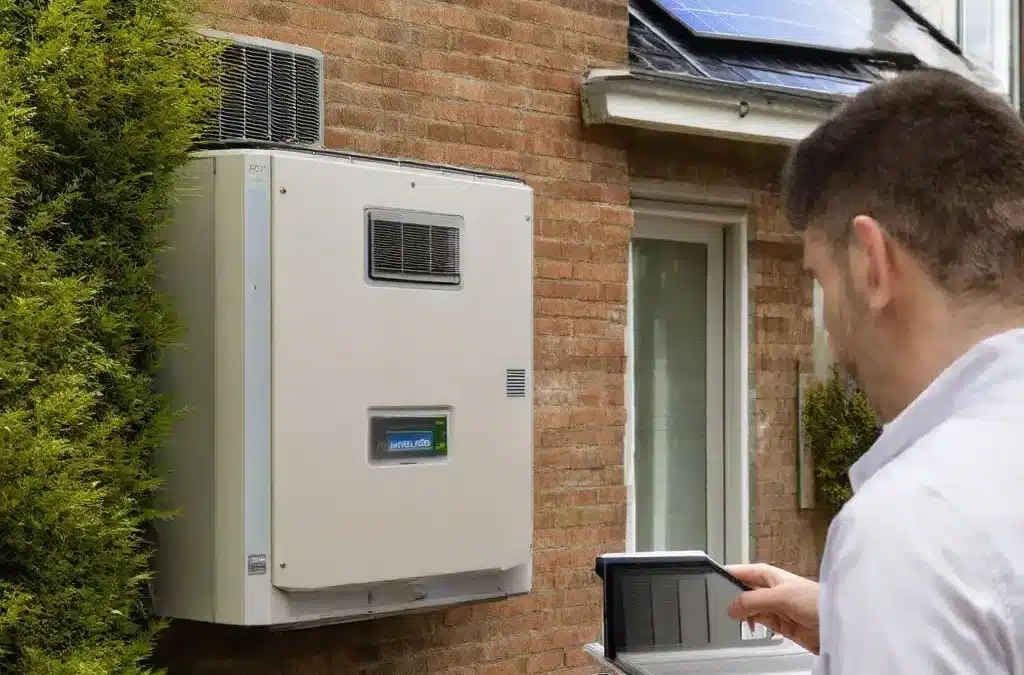
The UK’s transition to low‑carbon home heating is being reshaped by a wave of digital innovation. New platforms are streamlining every step of the heat pump journey—from initial education and property assessment to installer matching, finance, and aftercare. For homeowners and businesses, this means faster decisions, clearer expectations, and a smoother path to installation.
- Online assessment tools use property data, EPC records, and thermal modelling to estimate heat loss and system size before a site visit, reducing uncertainty and improving design accuracy.
- Marketplaces and vetted installer networks connect customers to qualified, accredited engineers, raising standards and shortening lead times.
- Digital finance solutions and grant-checking tools help clients understand eligibility for schemes such as ECO4, while simplifying documentation and approvals.
- Smart controls, remote monitoring, and performance analytics enable installers to fine‑tune systems post‑commissioning, ensuring that real‑world efficiency aligns with design assumptions.
These innovations are not merely convenient; they materially improve outcomes. Heat pumps are most efficient when designed around a property’s specific heat demand and operated at lower flow temperatures. Data‑led design, transparent quoting, and connected controls reduce the risk of oversizing, minimise running costs, and increase the likelihood of a positive customer experience—key drivers of wider market adoption.
Training, Standards, and the Craft of High‑Efficiency Installations
The performance of a heat pump depends as much on the installer’s expertise as on the technology itself. Rigorous training and adherence to recognised standards are essential to deliver high seasonal efficiency, quiet operation, and long service life.
- Competence and accreditation: MCS certification remains the gold standard for system design and installation. Many installers also undertake Heat Pump Association and BPEC courses that cover refrigerant handling, hydronic design, and low‑temperature heating principles. F‑Gas certification is required where refrigerants are handled.
- Whole‑house design: Accurate room‑by‑room heat loss calculations, correct emitter sizing (radiators or underfloor heating), and hydraulic balancing ensure that systems operate at lower flow temperatures—often 35–50°C—where efficiency is highest.
- Controls and commissioning: Weather compensation, appropriate set‑back strategies, and careful commissioning prevent short‑cycling and maintain comfort. Properly set controls can add double‑digit percentage gains to real‑world efficiency.
- Retrofit standards: For existing homes, PAS 2035/2030 and TrustMark frameworks guide a fabric‑first approach, ventilation considerations, and quality assurance—reducing performance gaps between design and operation.
For businesses and larger sites, the same principles apply at scale. Correct zoning, thermal storage, and demand management are critical to capturing the full benefits of commercial air‑to‑water or ground‑source systems. In all cases, experienced engineers remain the difference between a system that meets expectations and one that underperforms. This is why Eco 4 Ltd invests in robust training, continuous professional development, and stringent internal QA processes to deliver installations that meet or exceed published performance metrics.
Decarbonising Home Heating: Challenges and Momentum
While the case for heat pumps is compelling—lower carbon emissions, the potential for lower lifetime costs, and improved comfort—decarbonising the UK’s vast and varied housing stock presents real challenges.
- Housing diversity: Britain’s homes range from new‑builds with excellent insulation to older, solid‑wall properties. Many retrofits benefit from fabric upgrades to reduce heat demand and enable lower flow temperatures.
- Energy prices and tariffs: The electricity‑to‑gas price ratio influences running costs. However, the grid is decarbonising rapidly, smart tariffs are expanding, and solar PV plus battery storage can improve the economics further.
- Installer capacity: Demand is rising faster than the supply of highly trained engineers. Continued investment in skills and apprenticeships is essential to maintain quality as volumes grow.
- Awareness and trust: Heat pumps are different, not difficult. Clear information, realistic expectations, and strong aftercare are vital to consumer confidence.
Despite these hurdles, homeowner interest is accelerating. Clients increasingly value comfort, low noise, steady temperatures, and air quality benefits that come from well‑designed low‑temperature systems. Policy drivers, corporate ESG commitments, and landlord obligations add further momentum. Importantly, funding mechanisms such as ECO4 can make the transition accessible to eligible households by subsidising or, in some cases, potentially covering all installation costs subject to assessment and criteria. Eco 4 Ltd supports clients through this process with complimentary surveys and guidance on grant applications, ensuring that the right measures are matched to each property.
From Gas Boilers to Heat Pumps: Replacement Potential and the Installation Imperative
Can heat pumps replace traditional gas boilers? In many homes and commercial premises, the answer is yes—with the right design and installation. Air‑source heat pumps (ASHPs) are typically the simplest route for most properties, while ground‑source systems (GSHPs) can provide exceptional seasonal efficiency where space and ground conditions allow. Hybrid systems may serve as transitional solutions in certain cases, though the long‑term direction is toward fully electrified heating in support of the UK’s Net Zero 2050 target.
Success hinges on meticulous preparation and execution:
1) Survey and design
- Detailed heat loss calculations by room.
- Assessment of emitters and pipework; upgrade where necessary to support low flow temperatures.
- Evaluation of electrical supply, outdoor unit placement, acoustic considerations, and planning constraints.
- Integration strategy for hot water, controls, and (if relevant) solar PV and battery storage.
2) Installation and commissioning
- Clean, well‑balanced hydraulics with attention to flow rates and pump head.
- Appropriate use of buffer vessels or low‑loss headers where system complexity demands.
- Weather compensation enabled and tuned to the property.
- Comprehensive commissioning checks, end‑user handover, and performance validation.
3) Optimisation and aftercare
- Remote monitoring and periodic review to maintain seasonal performance.
- Clear guidance on controls and set‑backs to avoid unnecessary energy use.
- Scheduled servicing to preserve efficiency and longevity.
When these steps are followed, heat pumps can deliver high Seasonal Coefficients of Performance (SCOP), stable comfort, and significant carbon reductions. Conversely, shortcuts—oversizing, inadequate emitter upgrades, or poor control strategies—can erode efficiency. The lesson is clear: technology and craftsmanship are inseparable.
How Eco 4 Ltd Helps You Transition with Confidence
Eco 4 Ltd is committed to making low‑carbon heating practical, dependable, and affordable for households and businesses across London and Essex. With over 20 years of plumbing and heating experience, our team brings the blend of design expertise, regulatory knowledge, and customer care that successful heat pump projects require.
- Grant support and compliance: As a registered installer for the ECO4 Grant Schemes, we guide you through eligibility checks, documentation, and applications. Subject to assessment, the grant can potentially cover all costs associated with heating upgrades aimed at improving your EPC rating.
- Complimentary surveys and transparent proposals: We conduct no‑obligation surveys to assess your property, model performance, and specify any fabric or emitter upgrades needed to achieve optimal results.
- Quality installations and aftercare: Our engineers are trained to leading standards, and we deploy best‑practice commissioning and controls to secure real‑world efficiency. We also offer maintenance and support to keep systems performing at their best.
- Integrated energy solutions: Beyond heat pumps, Eco 4 Ltd provides boiler services, commercial plumbing, gas safety inspections, power flushing, air conditioning, and solar panel installations—so you can plan a cohesive, future‑ready energy strategy.
- Proven customer satisfaction: Our clients consistently rate our professionalism and workmanship highly, reflected in a 4.9/5 Trustpilot score and a 4.7/5 Google rating.
The UK’s heating transition is accelerating, enabled by digital innovation, rigorous training, and supportive policy. With Eco 4 Ltd as your partner, you can navigate this change with confidence—moving to a cleaner, quieter, and more efficient heating system that supports Net Zero ambitions while enhancing day‑to‑day comfort. To discuss your property and explore ECO4 grant options, please contact us by phone, email, or through our website’s enquiry form; we will tailor a proposal to your specific needs and objectives.
