
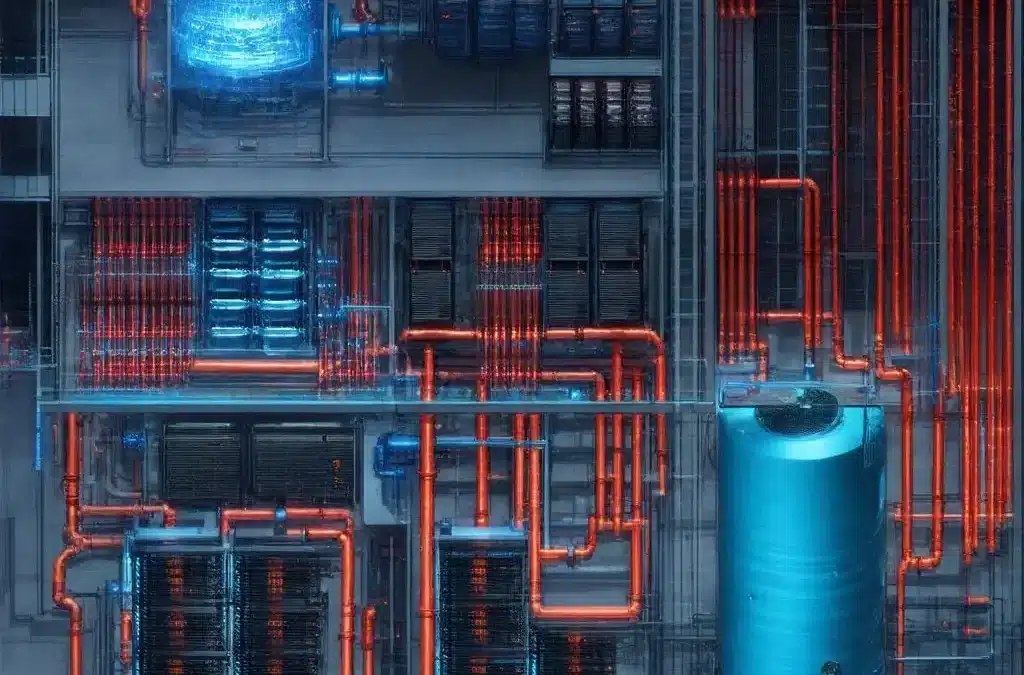
Across London, Essex, and other urban centres, demand for reliable heat intersects with the rapid growth of digital asset computing—high-density servers that secure blockchains, support exchanges, and power adjacent data services. These machines convert nearly all of the electricity they consume into heat. Traditionally, that heat is treated as a cost to be removed via chillers and fans. A more sustainable approach treats it as a resource: capture the “waste” heat, upgrade it where necessary with heat pumps, and distribute it through local heating systems.
This concept is not speculative. Heat-recovery systems are already helping decarbonise district heating networks and individual buildings in Europe and the UK. When designed well, they deliver three advantages simultaneously:
- Lower emissions: Heat recovered from servers and upgraded by high-efficiency heat pumps can have a markedly lower carbon intensity than gas-fired heat, particularly as the electricity grid decarbonises.
- Lower operating costs: Revenue from heat sales offsets cooling costs for digital operators, while households and businesses gain access to stable, competitive heat tariffs less exposed to fossil fuel volatility.
- Local resilience: Thermal networks and stores buffer intermittent electricity supply and improve community energy security.
For property owners and facilities managers in London and Essex, this model complements broader retrofit programmes—insulation, smart controls, heat pumps, and low-temperature emitters—needed to meet the UK’s Net Zero target by 2050. Eco 4 Ltd’s experience with high-efficiency systems and grants places these opportunities within reach for homes and commercial sites considering future-ready heating.
Inside a 2-megawatt district heating pilot
A recent pilot project—representative of deployments emerging across Northern Europe and the UK—integrated a 2-megawatt (MW) heat-recovery system from digital asset computing into a local district heating loop. While site specifics vary, the core architecture illustrates how this technology works end to end:
-
Heat capture: High-density compute racks are configured for efficient heat extraction. In air-cooled halls, hot aisle containment and plate heat exchangers transfer energy into a water circuit at 30–40°C. Where liquid cooling is used, outlet temperatures can be higher, improving overall efficiency.
-
Heat upgrade: Industrial heat pumps raise the low-grade heat to network supply temperatures. Modern units can deliver 60–75°C flow for fourth-generation heat networks, with seasonal coefficients of performance (SCOP) commonly between 3 and 5, depending on temperature lift and ambient conditions. Every 1 kWh of electricity input to the heat pumps can yield 3–5 kWh of usable heat.
-
Thermal integration: Buffer tanks and, where space allows, larger thermal stores decouple heat production from demand peaks. Intelligent controls prioritise direct use of recovered heat and modulate the heat pumps. Backup or peak-load boilers may remain for resilience, but are dispatched infrequently.
-
Distribution to consumers: The upgraded heat feeds the district loop via a hydraulic interface. Building-level heat interface units (HIUs) manage heat delivery for space heating and domestic hot water, with weather-compensated controls to maintain comfort while optimising temperatures and efficiency.
-
Metering and settlement: Calibrated heat meters at the offtake point and at customer connections support transparent billing and performance verification. Contract structures define availability, volume, and price indexing, aligning incentives between the computing operator, the network, and end users.
Outcomes from the 2 MW pilot underline the practical benefits. On the supply side, the digital operator reduced reliance on conventional chillers, cutting electrical demand for cooling and turning a pure cost into a heat revenue stream. On the demand side, local consumers received reliable heat at competitive, predictable tariffs, supported by diversified, low-carbon supply. Importantly, lifecycle performance was tracked across seasons, demonstrating that even during colder months the system sustained efficient operation by balancing heat pump settings, flow temperatures, and thermal storage.
This approach is scalable. Multiple modules can be added as computing demand grows, and where networks adopt lower supply temperatures or embrace ambient-loop architectures (sometimes known as fifth-generation heat networks), the required temperature lift drops, improving SCOP and further reducing carbon intensity and cost.
Navigating practical and regulatory considerations
While technically sound, heat reuse projects must navigate a set of practical and policy challenges. Early attention to these areas increases the likelihood of a timely, compliant, and bankable scheme.
-
Siting and infrastructure coordination: The strongest business cases pair computing sites with nearby heat demand—existing district networks, new developments, or anchor loads such as hospitals, leisure centres, or mixed-use estates. Pipe routing, street works permissions, and traffic management plans must be resolved at design stage to control cost and disruption.
-
Temperature and compatibility: Many existing buildings and legacy networks were designed around higher flow temperatures. A successful project may include emitter upgrades, balancing, or smart controls to enable lower-temperature operation. For homes and small businesses, this often includes adding or resizing radiators, installing HIUs, or improving fabric efficiency to reduce peak loads.
-
Grid capacity and operations: Heat pumps add electrical load that must be coordinated with the local distribution network operator. Demand-side response, staged compressors, and thermal storage mitigate peak demand, reduce connection costs, and allow the system to operate when grid carbon intensity is lowest.
-
Regulation of heat networks: The UK is formalising consumer protections and technical standards for heat networks, with Ofgem expected to regulate the sector under the Heat Networks Market Framework. Compliance will encompass performance standards, metering and billing accuracy, and customer service obligations. Developers should also consider emerging heat network zoning policy, which will shape where and how networks expand.
-
Environmental compliance and safety: Depending on design, projects may need planning consent, environmental permits for refrigerants (F-gas regulations), noise assessments for outdoor units, and adherence to Building Regulations (including Part L). Legionella risk management, safe hot water delivery temperatures, and appropriate materials (oxygen barriers, corrosion control) are essential for network integrity.
-
Contracting and bankability: Long-term heat offtake agreements underpin project finance. Transparent performance guarantees, price indexation mechanisms, and clear allocation of maintenance responsibilities build confidence for all parties.
-
Public acceptance and communication: As with any street-level infrastructure, residents and businesses value clear timelines, reliable service, and responsive customer care. Demonstrating measurable carbon savings and stable tariffs helps secure and keep community support.
These considerations are not barriers; they are design requirements that experienced installers, engineers, and operators can address. Early feasibility studies and coordinated stakeholder engagement are critical steps toward successful delivery.
Environmental and economic gains for communities and industry
Heat recovery from digital computing is a practical example of circular energy use. When coupled with efficient distribution and demand-side upgrades, it can materially improve environmental performance and local economics.
Environmental benefits:
- Lower lifecycle emissions: Because servers already generate heat as a by-product, using it avoids separate combustion-based heat generation. With modern heat pumps and a decarbonising grid, the carbon intensity of delivered heat is substantially lower than gas-fired alternatives on an annual average basis.
- Grid-friendly flexibility: Thermal storage and controllable heat pumps shift electrical load toward periods with abundant renewable generation, smoothing variability and enabling higher renewable penetration overall.
- Reduced urban waste heat: Capturing heat at source reduces the “urban heat island” effect associated with large-scale mechanical cooling.
Economic benefits:
- Cost stability for consumers: Heat tariffs linked to efficient electricity use and diversified supply can be more stable than those tied to volatile global gas prices. This is particularly valuable for businesses managing operational budgets and for households seeking predictable bills.
- New revenue for operators: Digital asset operators offset cooling costs and create a long-term revenue stream through heat sales, improving project viability without compromising computing performance.
- Efficient asset utilisation: Co-located systems make better use of existing urban space and infrastructure, especially where district networks already exist or are planned.
What this means for property owners in London and Essex:
- Homes connected to heat networks benefit most when internal systems are “low-temperature ready.” Upgrades include improved insulation, properly sized radiators or underfloor heating, weather-compensated controls, and well-balanced circuits.
- Commercial premises can integrate plate heat exchangers, thermal stores, and smart controls to interface efficiently with network supply temperatures, improving comfort and reducing running costs.
- Where network connections are not yet available, high-efficiency heat pumps paired with solar PV and battery storage provide a strong, future-ready pathway that is compatible with eventual network integration.
How Eco 4 Ltd can support delivery and adoption
Eco 4 Ltd brings over two decades of plumbing and heating experience to modern, sustainable heating projects across London and Essex. Our focus on energy efficiency, regulatory compliance, and customer satisfaction positions us to help both households and businesses participate in—and benefit from—heat recovery and low-carbon networks.
Our capabilities relevant to heat reuse and low-carbon heating include:
- Heat pump systems: Design and installation of air-source and other high-efficiency heat pumps for homes and commercial sites, optimised for low-temperature operation and integrated with existing emitters where feasible.
- District heating interfaces: Specification and installation of heat interface units (HIUs), plate heat exchangers, thermal stores, and controls to ensure safe, efficient connection to community heat networks when available.
- Building optimisation: Power flushing, hydronic balancing, smart zoning, and emitter upgrades that improve comfort and efficiency while preparing properties for low-carbon heat.
- Complementary technologies: Solar PV integration, controls, and monitoring for demand management and ongoing performance verification.
- Compliance and assurance: Guidance on Building Regulations, metering, safety standards, and emerging heat network requirements, reducing project risk for property owners and facility managers.
- Grant support and surveys: Complimentary surveys to assess suitability for upgrades and assistance in accessing funding. As a registered installer for the ECO4 grant scheme, Eco 4 Ltd helps eligible clients pursue measures that improve EPC ratings, such as insulation and heat pump installations. Depending on eligibility and property specifics, ECO4 may cover a significant portion—and in some cases potentially all—of the upgrade costs.
For homeowners, this support translates into clear, step-by-step pathways to more comfortable, efficient homes that are ready to connect to low-carbon heat sources as they become available. For businesses and commercial property managers, it provides end-to-end coordination—plantroom integration, controls, compliance, and lifecycle maintenance—that de-risks adoption and maximises return on investment.
Repurposing excess heat from digital assets is a pragmatic, scalable tool for decarbonising heat. With careful design, appropriate regulation, and experienced delivery partners, it can reduce emissions, stabilise costs, and strengthen local energy resilience. Eco 4 Ltd stands ready to help London and Essex properties prepare for and connect to these greener heat solutions, aligning immediate benefits with the UK’s long-term Net Zero goals.
